Goldman Sachs2026-10-04 03:54:53Goldman says long-dated Treasuries have few buyers as strategists warn prices may not have bottomedGoldman Sachs trading executive Rich Privorotsky said long-dated U.S. Treasuries are seeing virtually no demand, even after softer August PCE data and a cooler September nonfarm payrolls report led markets to lower the odds of another October rate hike by Federal Reserve Chair Waller. The 10-year Treasury yield rose to 5.34% intraday on Oct. 1, the highest level since 2002, and was still near 5.28% on Oct. 2. The report also highlights a policy angle. The U.S. Treasury said on Sept. 28 that Jefferies chief market strategist David Zervos would join the Treasury Secretary’s office as an adviser. Zervos said the department is taking back control of debt-maturity management, though officials have not detailed any issuance changes. Treasury had already doubled long-bond buybacks to $4 billion in August, yet yields kept climbing. Bloomberg macro strategist Simon White argued that cheap valuations alone do not make a compelling case to buy. He said mean reversion patterns and his leading indicator for 10-year real yields both suggest the bottom may still be ahead. White also warned that if the 10-year yield holds in a 5.25% to 5.50% range, stock-bond correlations could turn positive, weakening Treasuries’ role as a hedge.20
Bank of Ameri2026-10-04 02:31:40BofA warns current AI-driven market concentration resembles the run-up to the 2000 tech bubble peakBank of America strategist Michael Hartnett said in the latest edition of "Flow Show" that the current structure of the U.S. equity market looks strikingly similar to the period just before the 2000 dot-com bubble peak. He pointed to a market split in which AI-related trades and mega-cap technology stocks continue to lead while much of the rest of the market remains under pressure. Hartnett said investors are long AI assets represented by the Nasdaq 100 and the Magnificent Seven, while shorting areas with lower AI exposure such as the S&P 500 equal-weight index, adding that the "1999 analogy still holds." He also described AI as the "biggest bubble since railroads," while noting key differences between the two eras, including rising semiconductor prices today and the lack of support from falling Treasury yields. Hartnett said the U.S. 10-year Treasury yield has climbed to 5.33%, the highest since 2002, and proposed a "buy humiliation" trade in bonds. He also flagged four market warning levels tied to IXG, MOVE, MDY and IJR, while BofA’s bull-and-bear indicator slipped from 9.3 to 8.8 but remained in "sell" territory.20
US Treasury2026-10-03 17:08:42Bessent says higher Treasury yields track global trend, backs openness to similar aidU.S. Treasury Secretary Bessent said the recent rise in U.S. Treasury yields is in line with a broader global trend and does not warrant excessive alarm. He also praised U.S. financial intervention in Argentina and said he is open to similar assistance in the future. On technology markets, Bessent pushed back on concerns about an AI bubble, saying companies including Microsoft, Google, and Meta are generating meaningful revenue growth. The remarks, cited by ChainCatcher, touched on bond markets, international financial support, and the earnings case behind current AI-related investment enthusiasm.20
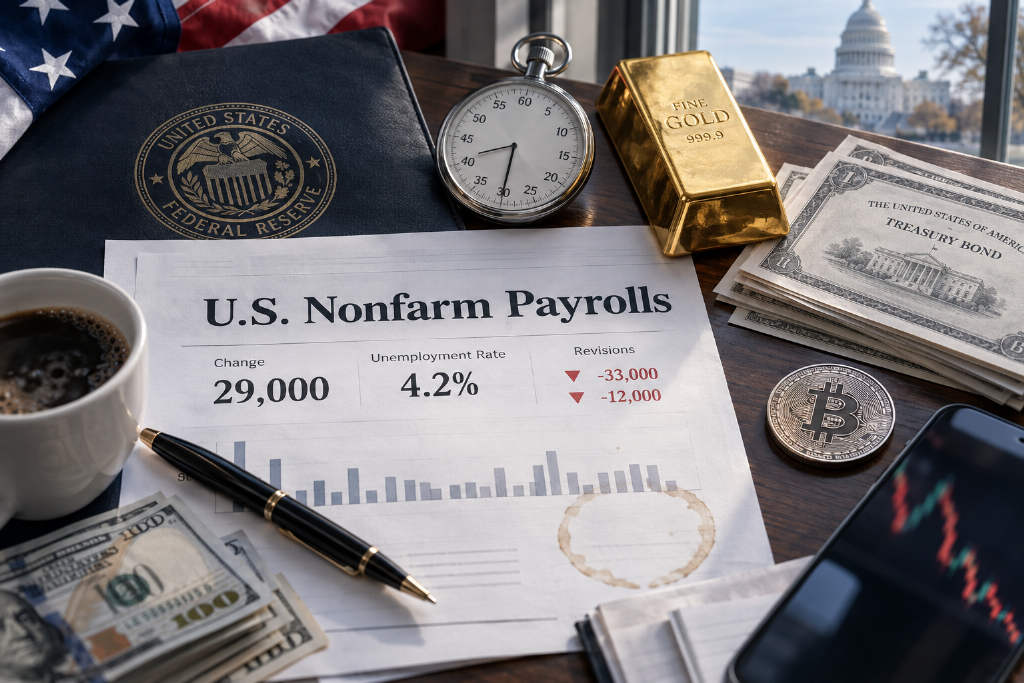
Federal Reser2026-10-03 15:10:24Fed minutes, G7 oil reserve release and long-end Treasury yields set the tone for next weekMarkets enter next week with the focus shifting away from whether the Federal Reserve will raise rates in October and toward whether a move could still come in December. That turn followed a weak U.S. September payrolls report, which showed only 29,000 jobs added, well below the 90,000 expected, while August payrolls were revised down by 133,000 and the unemployment rate rose to 4.2%. After the release, rate expectations cooled sharply. CME FedWatch data showed the probability of no change in October rising to 83.9%, while the probability of a December hike stood at 66.1%. At the same time, the 10-year U.S. Treasury yield briefly climbed to 5.36%, and the U.S. dollar index hit a 17-month high, keeping pressure on gold and broader risk assets. Investors will now watch the Fed’s September meeting minutes, due at 2 a.m. Beijing time on Thursday, for details on how officials weighed inflation and labor-market risks and how divided they were over another hike versus a pause. Next week’s calendar also includes remarks from Fed Governor Michelle Bowman and St. Louis Fed President Alberto Musalem, U.S. Treasury buyback and auction operations, the U.S. ISM non-manufacturing PMI, and developments in energy markets after the G7 agreed to release 100 million barrels of oil and diesel reserves.20
Policy Regula2026-10-03 13:26:36WSJ: AI-driven capital pull is widening the split in U.S. stocks and pressuring non-tech companiesA Wall Street Journal report said the divide inside the U.S. equity market widened sharply in September, even as headline indexes masked the weakness underneath. The S&P 500 was roughly flat and the Nasdaq 100 gained 3%, but nearly 80% of S&P 500 constituents fell, with an average decline of about 5%. Of the index’s 11 sectors, only technology and communication services posted gains. The report also pointed to a growing gap between large-cap winners tied to artificial intelligence and the rest of the market. The Russell 2000 fell 5% during the same period, while the 50 largest companies by market value rose 2%. Stocks that advanced in September were broadly linked to AI or the data-center supply chain. At the same time, non-AI businesses were dealing with higher financing costs, rising energy prices, and competition from AI companies for workers, equipment, and capital. UBS chief economist Arend Kapteyn said U.S. capital spending is “basically zero” once AI tech companies are excluded. The Journal added that credit spreads have started to widen, with spreads on CCC-rated bonds rising by more than 1 percentage point in September, while Wall Street has also begun to trim its expectations for earnings growth.20
US payrolls2026-10-03 09:21:16Weak U.S. payrolls fail to break long-end yields as Wall Street shifts focus to how long 5% rates lastA much weaker-than-expected U.S. jobs report briefly pushed traders to price in a softer Federal Reserve path, but the move stopped at the front end of the Treasury curve. September nonfarm payrolls rose by just 29,000, far below the 90,000 expected, while August payrolls were revised down to 133,000 from 162,000. The immediate reaction was textbook: the 2-year Treasury yield fell 10 basis points to 4.69%, S&P 500 futures rose 0.8%, Nasdaq 100 futures gained 1.1%, and CME FedWatch showed the odds of an October rate hike dropping to 17% from 22%. That response did not last long. The 10-year Treasury yield rebounded sharply from an intraday low of 5.16% to 5.30% by midday, near Thursday’s 5.34% peak, a level last seen in 2002. The split between the front and long end of the curve underscored what investors are now wrestling with: weak labor data may cool near-term hike expectations, but inflation, Treasury supply, and term premium are still keeping long-dated yields elevated. For Wall Street, the bigger question is no longer simply whether the Fed hikes again. It is whether the economy can keep absorbing borrowing costs that refuse to fall, with pressure already showing in housing, autos, consumer loans, and credit cards while AI-linked spending remains comparatively resilient.30
Bitcoin2026-10-03 02:24:02Bitcoin Gives Back Jump to $85,500 as Soft PCE Fails to Offset Sticky Treasury YieldsBitcoin briefly climbed to $85,500 after August PCE inflation data came in below expectations, feeding hopes that the Federal Reserve may be moving closer to rate cuts. The move did not last. A late-session sell-off in U.S. Treasuries kept yields elevated and erased the crypto market’s gains, with BTC falling back to around $83,700 in Asian morning trading and showing only a 0.4% gain over 24 hours. According to CoinDesk, LVRG Research chief analyst Dan Khus said the inflation print alone was not enough to keep Bitcoin above $85,000 while the 10-year Treasury yield remains near 5.3%. He pointed to a sustained drop in yields, rather than just another softer inflation reading, as the condition the market needs for a stronger push higher. The report also noted mixed performance across major tokens, with HYPE leading gains while Solana lagged, and highlighted that moves in Treasury yields, the Fed path, the dollar, oil, and even AI-related equity news are all shaping risk-asset pricing at the same time.20
Bitcoin2026-10-02 11:22:40Bitcoin Gives Back Early Gains After Weak U.S. September Jobs ReportBitcoin gave back a large part of its early advance after a weaker-than-expected U.S. jobs report for September pointed to a softer labor market. The government’s nonfarm payrolls report showed the U.S. added 29,000 jobs, far below the 90,000 consensus forecast and down from August’s revised gain of 133,000, which had originally been reported as 162,000. The unemployment rate rose to 4.2%, above expectations of 4.1%, while July payrolls were revised from a gain of 21,000 to a loss of 10,000. Wage growth also missed estimates, with average hourly earnings up 0.1% month over month and 3% year over year. In broader markets, Nasdaq futures rose 1.2%, the 10-year Treasury yield fell 7 basis points to 5.17%, the 2-year yield dropped to 4.71%, gold gained more than 1%, and the U.S. dollar weakened against major currencies. CoinDesk said the softer labor data could give the Federal Reserve room to keep rates unchanged even with inflation still elevated.20